Saudi Arabia’s sports sector is entering a new and pivotal phase. Guided by the ambitions of Vision 2030, the Kingdom is reshaping its sports landscape through comprehensive legal and regulatory reform. These changes are accelerating the professionalisation of clubs, enhancing protections for players, and creating an increasingly attractive environment for both domestic and international investment. The result is a sector that is more transparent, commercially viable, and aligned with global sporting standards.
The Ministry of Finance has issued a resolution extending the Tax Amnesty Initiative, as published on page one of the Official Gazette, Issue No. 5135.
Entities should begin preparing for IFRS 18 ‘Presentation and Disclosure in Financial Statements’ sooner rather than later. Changes from IAS 1 ‘Presentation of Financial Statements’ could have a significant impact on the financial statements.
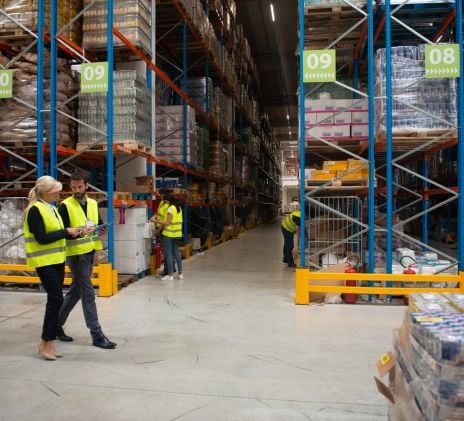
Last-mile delivery refers to the final stage of the logistics journey, where goods move from a fulfilment centre, hub, or distribution point to the end customer. While it is operationally the “last” step, it is often the most visible, complex, and costly part of the entire supply chain.
Saudi Arabia’s 2026 budget marks a pivotal moment in the Kingdom’s economic transformation. As the country enters the second half of Vision 2030, the budget signals a confident shift from large-scale infrastructure delivery to a more mature phase defined by diversification, private-sector expansion, and long-term fiscal stability. This page highlights the most important themes shaping the coming year, what they mean for companies already operating in the Kingdom and why international investors are finding Saudi Arabia one of the most compelling markets globally.
In a significant step towards strengthening urban development and real estate reform, the Ministry of Municipal, Rural Affairs and Housing (MOMRAH) has announced the issuance of the updated Executive Regulations for the White Land Fees on 28/2/1447H (22 August 2025). The new regulations form part of Saudi Arabia’s ongoing efforts to promote efficient land use, stimulate housing development, and achieve the broader objectives of Saudi Vision 2030.
Grant Thornton Saudi Arabia has signed a Memorandum of Understanding (MoU) with the Association of Chartered Certified Accountants (ACCA) to strengthen collaboration in advancing the accounting and finance profession across the Kingdom.
In a step toward greater transparency and alignment with global best practices, the GCC Financial and Economic Cooperation Committee has approved a new methodology for calculating excise tax on sweetened beverages.
Our ‘IFRS Viewpoint’ series provides insights from our global IFRS team on applying IFRS Accounting Standards in challenging situations. Each edition will focus on an area where the Standards have proved difficult to apply or lack guidance. This edition provides guidance on some of the basic issues encountered in accounting for cryptocurrencies, focusing on the accounting for the holder.
On 26 September 2025, ZATCA announced the 24th wave of taxpayers required to implement phase 2 of e-invoicing integration. This wave extends the obligation to taxpayers whose taxable revenues exceeded SAR 375,000 during the years 2022, 2023, or 2024.
In 2023, the International Sustainability Standards Board (ISSB) issued its first two international IFRS Sustainability Disclosure Standards (IFRS SDS), IFRS S1 ‘General Requirements for Disclosure of Sustainability-related Financial Information’ and IFRS S2 ‘Climate-related Disclosures’.
Revenue recognition is fundamental in all businesses, and it is important that it is recognised in a consistent and comparable way across industries and capital markets.
Across the world, tax administrations have long recognised that compliance is not only about enforcement. It is also about providing pathways for taxpayers to voluntarily come forward, settle their obligations, and restore their standing within the system. Tax amnesty programs and voluntary disclosure initiatives have emerged as strategic policy tools that balance the needs of governments with the realities facing businesses and individuals. They do more than recover overdue revenues; they promote transparency, maintain economic stability, and foster long-term trust between taxpayers and regulators.
In today’s dynamic economic environment, accurately valuing businesses and assets has become more critical and more complex than ever. Within the Kingdom of Saudi Arabia, rapid economic transformation, increased M&A activity, evolving regulation, and global market fluctuations are redefining traditional valuation benchmarks. Volatility, whether triggered by shifts in oil prices, regional developments, or broader geopolitical risks, requires a more thoughtful and adaptable approach to ensure that fair value remains both reliable and defensible.
The government of the United States of America (US) has announced a series of changes in their economic and policy priorities. These include changes to import tariffs targeting major trading partners and the suspension of foreign development assistance.
As Saudi Arabia advances its transformation agenda, foreign investment continues to flow into key sectors, fuelling infrastructure projects and expanding industrial capacity. With this momentum, however, comes greater scrutiny of international trade practices, particularly in relation to pricing strategies and the protection of domestic industries.